Pages

Monday, 4 December 2017

More posters! - PBL


We used what we learned to make a poster highlighting the issues in our community. This will draw attention to our cause.


Wednesday, 29 November 2017

Looking around our community - PBL


On the 29th of November we went over to Kyle park to look at the conservation issues in our community. We took pictures of the worst areas, including litter, overgrown plants, and the lake that has turned brown. There was even a fallen over tree that no one has done anything about.


Scatter graph - Maths


In conclusion the data shows that for the most part the taller you are the bigger your foot size is. The murderer was likely between 160cm and 195cm tall.  There is one outlying piece of data, meaning that the previous statement is not 100% true.

Making bird feeders - PBL


On the 29th of November 2017 we taught the year 7's about conservation, by making bird feeders to feed wild birds. In my opinion it went very well. The kids seemed rather engaged, and found the task fulfilling. 
We hung the bird feeders up in the horticulture area, because it's far enough away from the school that people won't pull them down, but still on the grounds. 
Luckily everyone remembered to bring what they were supposed to, and the kids were better at paying attention than I thought. In hindsight we should have been a bit more organised.  


Thursday, 23 November 2017

Action plan 1 - PBL

We made some posters, and stuck them everywhere. It was great.
The purpose of this is to raise awareness for conservation efforts.
First we had to come up with information to put on the posters, and find appropriate pictures to put on them.


Then we had the final product.


Then we hung them up everywhere. The End.

Tuesday, 21 November 2017

Action plans - PBL


Steps needed to achieve the goal.
What will help us achieve this goal?(Enablers)
Possible barriers and how they could be overcome.
Who is responsible for this step?
Date this step will be achieved by.
One: Tell Chloe to make posters and pamphlets
Two: Give her information, and let her take charge
Three: Put posters around school, and hornby message boards.


Chloe being well behaved.
Chloe objecting/not doing it.
-Make her do it.
Chloe
24/11/17


Steps needed to achieve the goal.
What will help us achieve this goal?(Enablers)
Possible barriers and how they could be overcome.
Who is responsible for this step?
Date this step will be achieved by.
One: Put posters around school.
Cellotape
Teachers not letting us out of class. Go out the back door.
Team work
1/12/17
 
Steps needed to achieve the goal.
What will help us achieve this goal?(Enablers)
Possible barriers and how they could be overcome.
Who is responsible for this step?
Date this step will be achieved by.
One: Make muffins at scarlett’s house.
Two: Sell them for $2
If I can figure out how to use the oven.
If they sell well.
Advertising.
If we’re not allowed to sell them for whatever reason. Think of a different plan.
Scarlett and Rufus
28/11/17

 
Steps needed to achieve the goal.
What will help us achieve this goal?(Enablers)
Possible barriers and how they could be overcome.
Who is responsible for this step?
Date this step will be achieved by.
One: give the money from muffins to DOC.
Two: Be done with this hellish excuse for education.
If we can figure out how to give them the money.
If they don’t want the money. Give it to a different organisation who specialises in conservation.
Ruth
4/12/17

Wednesday, 15 November 2017

Project Based Learning

Our group is called: The Last of the Real Ones. The members are, Chloe, Jasmine, Ru(th)fus and myself (Scarlett). The topic we have chosen is conservation. Conservation is protecting the environment, the native birds and plants. So much of our country's native plant and animal life is endangered, because of introduced pests, and human poachers. What we want our project to do is raise awareness for conservation.


Website Name
Link
Date we accessed site
DOC
http://www.doc.govt.nz/
13/11/17
Conservation International
https://www.conservation.org/Pages/default.aspx
13/11/17
Ministry for the Environment
http://www.mfe.govt.nz/fresh-water/water-conservation-orders/existing-water-conservation-orders
13/11/17
Te Ara
https://teara.govt.nz/en/conservation-a-history
13/11/17
Massey Uni
http://www.massey.ac.nz/massey/learning/colleges/college-of-sciences/research/agriculture-environment-research/ecology/conservation.cfm
13/11/17

Tuesday, 14 November 2017

Show Reel - Music


The song I chose was called Kangaroo Cry by Blue October. I chose this song because I've known it since I was really young, and the message is very meaningful. I chose to do it on the ukulele because it's the only instrument I know how to play.

I've enjoyed practicing for our performance this year, and the freedom to chose what we want.
I've found performing very challenging, because of nerves.
If I could do one more performance this year I would try and go out of my comfort zone, because I don't think any of my performances were what I wanted them to be in the end.
My favourite performance this year has been the group performance because being with a group really gave me more confidence, but I don't think I would work with those girls again, because there was just to much difference in opinion.


Friday, 10 November 2017

Heat Experiment

Group: Chloe, Shikane, Ruth and SCARLETT
Aim: We were trying to figure out how colour affects heat
Method:
  1. We painted four beakers four different colours (black, white, red and blue).
  2. Fill them with hot water and put a thermometer in each one.
  3. Write down the temperature of each one every five minutes.
  4. Repeat for however long
Results:  I drew a graph showing the results. It shows that the red retained the most heat, white was second at retaining heat, blue was third, and black lost heat most easily.
Conclusion: I  learned that darker colours lost heat faster, whereas the lighter colours retained the heat better.

Research: Black and other darker colours absorb heat better than white and lighter colours. Likewise darker colours radiate heat faster than  lighter colours. This means that dark colours heat up faster and cool down faster.
 20171030_090317.jpg

Making indicators

Making Indicators

Aim: To make and test several indicators to see how their colour changes in acid and base solutions.

Follow the instruction in your book to make and test the indicators.

Fill in this table with your results:


AcidWaterBase
Beetrootdark redredpurple
Red Cabbagelight redbluegreen
Tumericorangeorangebrown
Canberrylight pinklight pinkpink

Before

After

Green & Rainbow challenge

Green and Rainbow challenges

A: Green challenge:

Take a test tube and fill with "two fingers" of the base. Now see the teacher for three drops of universal indicator. Now add the acid

Observations:
1. When we added the universal indicator to the base the colour changed to blue.
2. When the solution was neutralised the colour changed to green.


Image result for green liquid in a test tube

The most difficult thing about this challenge was getting 

B: Rainbow challenge:

Take a test tube, the base and the acid and universal indicator and create a the best rainbow in a test tube you can manage.

Acids, Bases + Indicators

Acids, Bases and Indicators

Aim: To investigate how indicators change colour in acids and bases.
Method:

1. Set up your spotting tile with two drops of acids in the first row of four, two drops of water in the middle row of four and then 2 drops of base in the last row of four.
2. In the first row of three put a small piece of red litmus paper (tear your strip into three for this), in the second row put a small piece of blue litmus paper, in the third row a small piece of universal litmus paper and in the fourth a drop of universal indicator.
3 Take a photo of your spotting tile

Conclusion:
Acids always turn/stay red. Bases always turn/stay red. Neutral always stay the same.

Wednesday, 20 September 2017

Artists Influenced by women's rights - Art

Artemisia Gentileschi
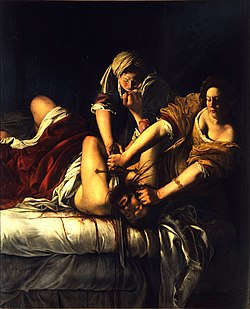
She used situations in her past as an inspiration for her art. This image shows two women beheading a man. Trying to get revenge on the patriarchy.
Image result for artemisia gentileschi

Cindy Sherman
She takes images of herself and other women, and re imagines them. This is to show stories from their past, shaping the people they are. Image result for cindy sherman art

Lyubov Popova
She worked with a lot of themes to do with breaking up gender roles.
Image result for lyubov popova

Wednesday, 13 September 2017

What I care about Brainstorm - Art

When I was doing this brainstorm I was thinking a lot about other choices I've made when working on a project in different classes. For instance, in social studies I've done many reports about women's rights, so it's a very over lying theme in my life. I was thinking also about how I always want to be the best, and I believe this mentality comes from having such high expectations to live up to. I also thoughts about how music influences me. My music taste is very much influenced by my parents, and my dad especially. My mum always tries to get me to listen to female bands, which has made me very passionate about female empowerment, and by association, womens rights.  

Wednesday, 30 August 2017

Wood cut - Art

My work was inspired by the German Expressionism era. This was my first print, and I think it is okay. I want to cut a bit more out around the eyes on the forehead, also just above the lips.

Wednesday, 23 August 2017

Making Table salt - Science

Making Table Salt

Aim: To make sodium chloride crystals by neutralising an acid with a base (alkali)

Method:
1. Measure 10ml of hydrochloric acid (HCl) in the small measuring cylinder and pour into a 50ml beaker.

2. Add dilute sodium hydroxide (NaOH) to the acid a few drops at a time while stirring with a glass stirring rod.

3. Use the glass stirring rod to transfer a drop of the solution to a spotting tile. Add a drop of universal indicator. Is it neutral? (green)

4. Once it is neutralised (pH = 7 - green) pour the liquid into an evaporating dish and heat till it boils slowly.


Observations: Write one observation for each step of the method.

1. The acid was really strong so we had to use ten mills of base, and add 5 drops of acid.
2. The water evaporated really fast, but the water in the evaporating dish was still there.
3. After we were left with a white substance on the bottom of our evaporating dish.
4.

Word equation for the reaction:
Hydrochloric acid + Sodium Hydroxide --> Sodium Chloride + water 

Balanced symbol equation for the reaction:
HCl + NaOH = NaCl + H2O

Monday, 21 August 2017

Acids and Bases - Science

Practical Assessment – Chemistry – Acids and Bases
Aim:
To measure the pH of several solids and liquids using universal indicator solution and a pH pen
Equipment:
Spotting tile
Universal indicator solution
Samples of several solids and liquids
pH pen
Method:
1.       Take two samples of each solid/liquid to be tested and arrange on your spotting tile. (If you are testing a solid add a drop of water and mix it before adding indicator)
2.       Place one drop of universal indicator on ONE of each sample.
3.       Use the pH pen to measure the pH of the other sample of each substance
Results:

Substance
Colour with pH
Description
pH Meter reading
Description
Eg. Substance A
Pale Blue
Weak base
8.3
Weak base
Sugar
Blue/Green
Weak base
5.8
Weak acid
Lux flakes
Blue/Green
Weak base
9.9
Average base
Detergent
Green/Yellow
Weak acid
7.8
Neutral
Toothpaste
Yellow
Weak acid
7.4
Neutral
Fruit juice
Orange
Average acid
3.6
Strong acid
Window cleaner
Blue
Average base
7.1
Neutral
Citric acid
Red/Pink
Strong acid
8.8
Weak base
Cheesels
Blue
Strong base
12.6
strong base

Conclusion:
I think that the pH readings are very very incorrect because people in my class were mixing all the chemicals, so the readings were incorrect.